Trying to choose between the KAST Card and the Tria Card? We’ve reviewed and tested both, so let’s put them side by side.
Both are USD-denominated Visa cards. The real differences are in the fees, the cashback, and what you can do with your money — so that’s what we’ll focus on.
KAST Card vs Tria Card
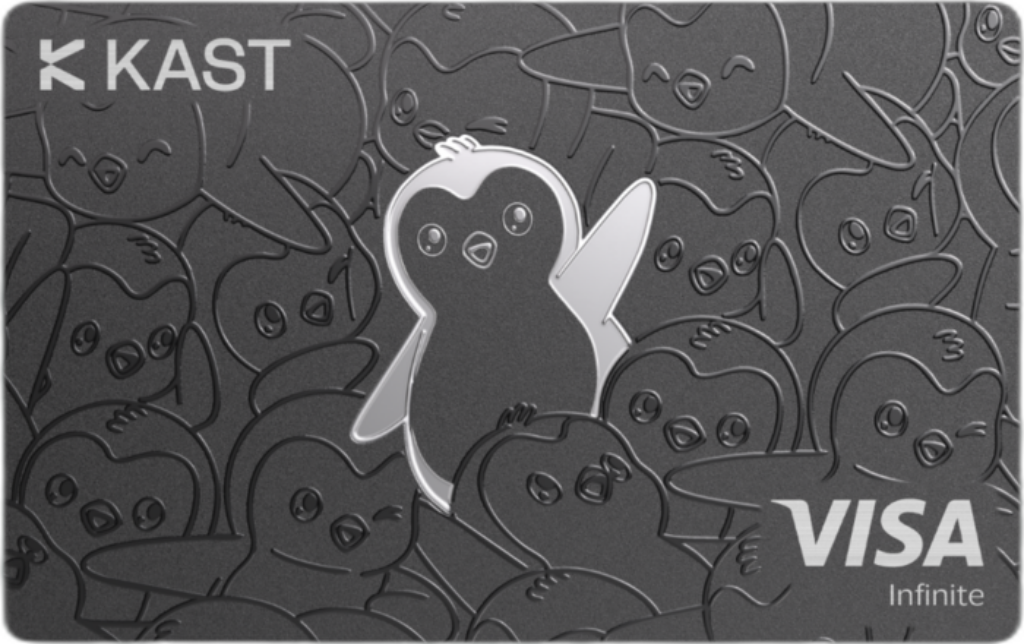





 +7
+7 - Cashback Up to 5%
- Supported Countries 177
- Apple Pay Enabled
- Daily Spend Limit Unlimited
- Bank Account in your name Yes
- Custody Custodial
- Card Issuer Rain - Puerto Rico
- 1:1 conversion from stables to USD, no card load fees
- Supports Apple Pay
- Supports 170+ countries
- Up to 5% Cashback
- Physical Card costs $40
- High ATM withdrawal fees
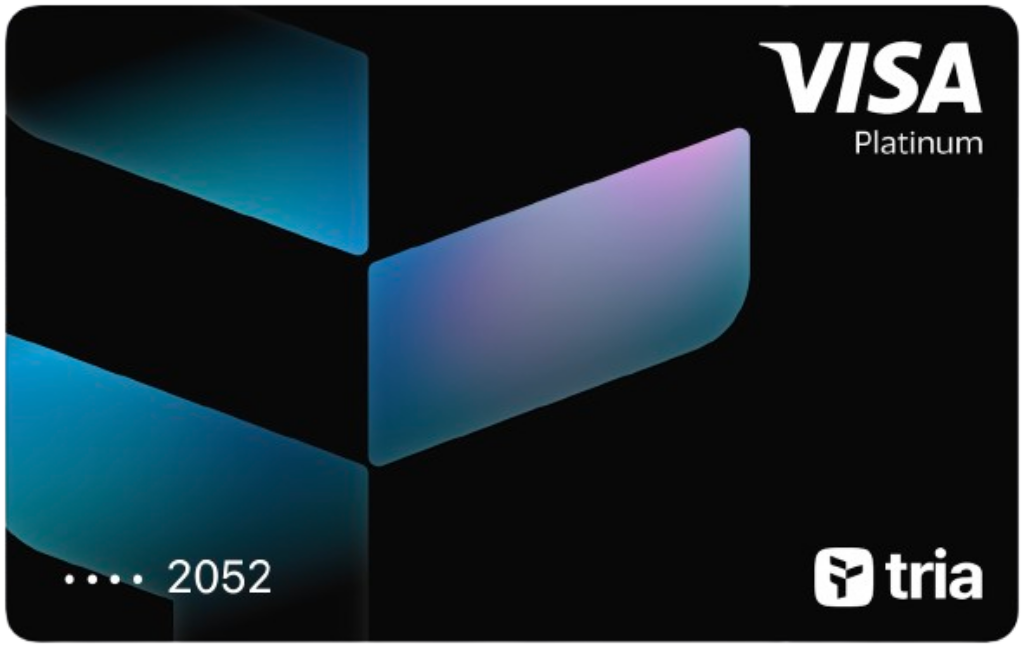

- Cashback Up to 6%
- Supported Countries 223
- Apple Pay Enabled
- Daily Spend Limit $ 1,000,000
- Bank Account in your name No
- Custody Non-Custodial
- Card Issuer Rain - Puerto Rico
- Incredibly generous fee structure
- Up to 6% cashback
- Fun to use - lots of perks and rewards
- Excellent customer service
- Can't unload the card once topped up
- No Bank Account offered
- Physical Card delivery still rolling out
Which Card Has Lower Fees?
When you pay with the KAST Card, converting your crypto into USD costs you 0%. The Tria Card charges ~0.4% for the same conversion.
That makes the KAST the cheaper card to actually spend with — and the difference adds up if you run a few thousand USD a month through it.
Monthly fee: $0 for the KAST, $2 for the Tria.
Here’s exactly where each card’s conversion cost comes from:
What About Foreign Exchange Fees?
Pay in a currency other than USD and the KAST Card adds a 1.75% foreign exchange fee. The Tria Card adds 0%.
If you travel a lot, or just live outside the USD zone, the Tria is the kinder card to your wallet here.
Stack that on top of the conversion cost, and a non-USD purchase costs you about ~1.75% in total with the KAST, versus ~0.4% with the Tria.
How Much Does Each Card Cost to Get?
The KAST virtual card is free, and the physical card costs $40. The Tria virtual card is $20, with the physical at $90.
If you just want to try one of them out, the KAST is the cheaper way in — the virtual card costs you nothing.
Which Card Pays Better Cashback?
The KAST Card pays up to 5%, and the Tria Card pays up to 6%.
On the free tiers, the KAST starts at 1.5% (capped at $30/month) and the Tria starts at 1.5% (capped at Unlimited/month) — the top rates need a paid or staked tier.
 Standard Tier |
 Premium Tier |
 Private Tier |
|
| Price | $0 | $85/month ($1,000 yearly) |
$850/month ($10,000 yearly) |
| Physical Card Shipping | $40 | Free | Free |
| Cashback in USD | 1.5% ($30 cap) |
2% ($200 cap) |
3% ($1,500 cap) |
| Rewards in KAST Points | 0% | 1% (no cap) |
2% (no cap) |
| Daily Spend Limit | Unlimited | Unlimited | Unlimited |
 Virtual Tier |
 Signature Tier |
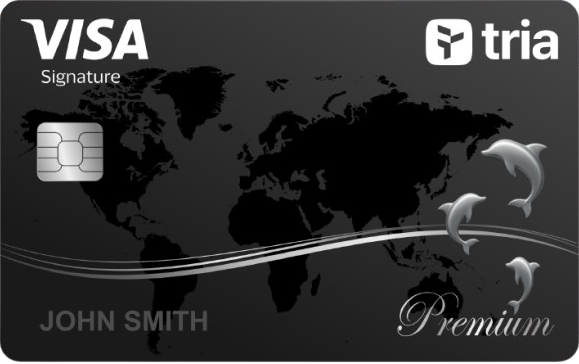 Premium Tier |
|
| Price | $2/month ($25 yearly) |
$9/month ($109 yearly) |
$21/month ($250 yearly) |
| Cashback in USD | 1.5% on $100, then 0.5% (no cap) |
4.5% on $1,000, then 1% (no cap) |
6% on $2,000, then 1% (no cap) |
| Rewards in Tria Points | 1 Point per $1 (no cap) |
1.5 Points per $1 (no cap) |
1.5 Points per $1 (no cap) |
| Boosted Yield on Earn | - |
Tria Points don’t have a fixed cash value, but they unlock Mystery Boxes with cashback, travel credits, USDT, perks, or equity draws.
Can You Cash Out at an ATM?
Need cash? The KAST Card lets you pull out up to $750 a day from ATMs, with a 2% + $3 fee per withdrawal. The Tria Card caps you at $750 a day, with a 1% + $1 fee per withdrawal.
Which Countries Can You Use Them In?
The KAST Card supports 177 countries for sign-up, and the Tria Card supports 223. Both cover most of the world.
Availability still differs country by country, so if you want to double-check yours, open the full list of crypto cards and filter by your country.
Which Cryptos and Blockchains Can You Spend?
You can top up the KAST Card with 5 cryptocurrencies (USDT, USDC, USDE, PYUSD, RLUSD) across 13 blockchains. The Tria Card takes 2 (USDT, USDC) across 6 blockchains.
KAST vs Tria: The Full Comparison Table
 KAST Card |  Tria Card | |
|---|---|---|
| Our Review Score | 8.8 / 10 | 8.3 / 10 |
| Card Type | Visa Credit | Visa Credit |
| Monthly Fee | $0 | $2 |
| Crypto to Fiat Cost | 0% | ~0.4% |
| Foreign Exchange Fee | 1.75% | 0% |
| Highest Cashback | up to 5% | up to 6% |
| Entry-Level Cashback | 1.5% (cap $30/mo) | 1.5% (cap Unlimited/mo) |
| Daily Spending Limit | Unlimited | $ 1,000,000 |
| Daily ATM Limit | $750 | $750 |
| ATM Fee | 2% + $3 | 1% + $1 |
| Virtual Card | $0 | $20 |
| Physical Card | $40 | $90 |
| Supported Countries | 177 | 223 |
| Supported Cryptos | 5 | 2 |
| Blockchains | 13 | 6 |
| Bank Account | USA-based (United States) | None |
| Top-Ups & Unloads | Yes | No |
| Apple Pay | Enabled | Enabled |
| Custody | Custodial | Non-Custodial |
| KYC | Required | Required |
| Card Validity | 5 years | 5 years |
| Card Issuer | Rain - Puerto Rico | Rain - Puerto Rico |
| Customer Service | 9.1 / 10 | 9.1 / 10 |
So Which Card Should You Get?
Here’s the short version, based on everything above:
Get the KAST Card if you want:
- cheaper crypto to USD conversions (0% vs ~0.4%)
- a USD bank account for receiving fiat
- a higher daily spend ceiling (Unlimited vs $ 1,000,000)
- a free virtual card
- a cheaper physical card ($40 vs $90)
Get the Tria Card if you want:
- lower foreign exchange fees when you travel (0% vs 1.75%)
- cashback on your spending (up to 6% vs up to 5%)
- availability in more countries (223 vs 177)
Want the full details on either card? Read our full KAST Card review or our Tria Card review.
Still not sure? Check the full list of crypto cards for more options.